WASABI METHOD
Lower Limb ESWT
Lower Limb Course
Lower Limb Course
Unlock the full potential of radial pressure wave therapy with the Wasabi Method Lower Limb Educational Module.
Key Features:
- In-Depth Training: Delve into detailed instructional content covering every aspect of radial pressure wave therapy for the lower limbs.
- Expert Insights: Learn from industry-leading experts who share their knowledge and experience.
- Practical Applications: Gain hands-on experience with real-world scenarios and case studies.
- Certification: Complete the module and earn a certification.
Couldn't load pickup availability
Description
Description
Radial Pressure Wave Therapy for the Lower Limb
Develop a clinically grounded understanding of radial pressure wave therapy for lower-limb musculoskeletal conditions. This practitioner-only Wasabi Method® course integrates functional anatomy, tissue pathology, current research, patient assessment, treatment parameters, practical technique, and rehabilitation planning.
Led by Dr. Adam Gavine, the course helps qualified healthcare professionals move beyond generalized treatment protocols. Participants will learn how diagnosis, tissue characteristics, symptom irritability, functional demands, load tolerance, and treatment response can inform the safe and appropriate use of radial pressure wave therapy.
What Is Radial Pressure Wave Therapy?
Radial pressure wave therapy is a noninvasive modality that delivers acoustic pressure waves through an applicator to targeted superficial tissues. The resulting mechanical stimulus is associated with biological responses that may influence pain modulation, local circulation, cellular signaling, and tissue remodeling.
Clinical use should follow an appropriate history, physical examination, differential diagnosis, screening for contraindications, and development of an individualized treatment and rehabilitation plan.
The course also distinguishes radial pressure wave therapy from focused extracorporeal shockwave therapy, including differences in wave generation, energy distribution, penetration depth, terminology, dosing, and potential clinical applications.
Lower-Limb Regions Covered
The course examines assessment, clinical reasoning, and treatment considerations for the:
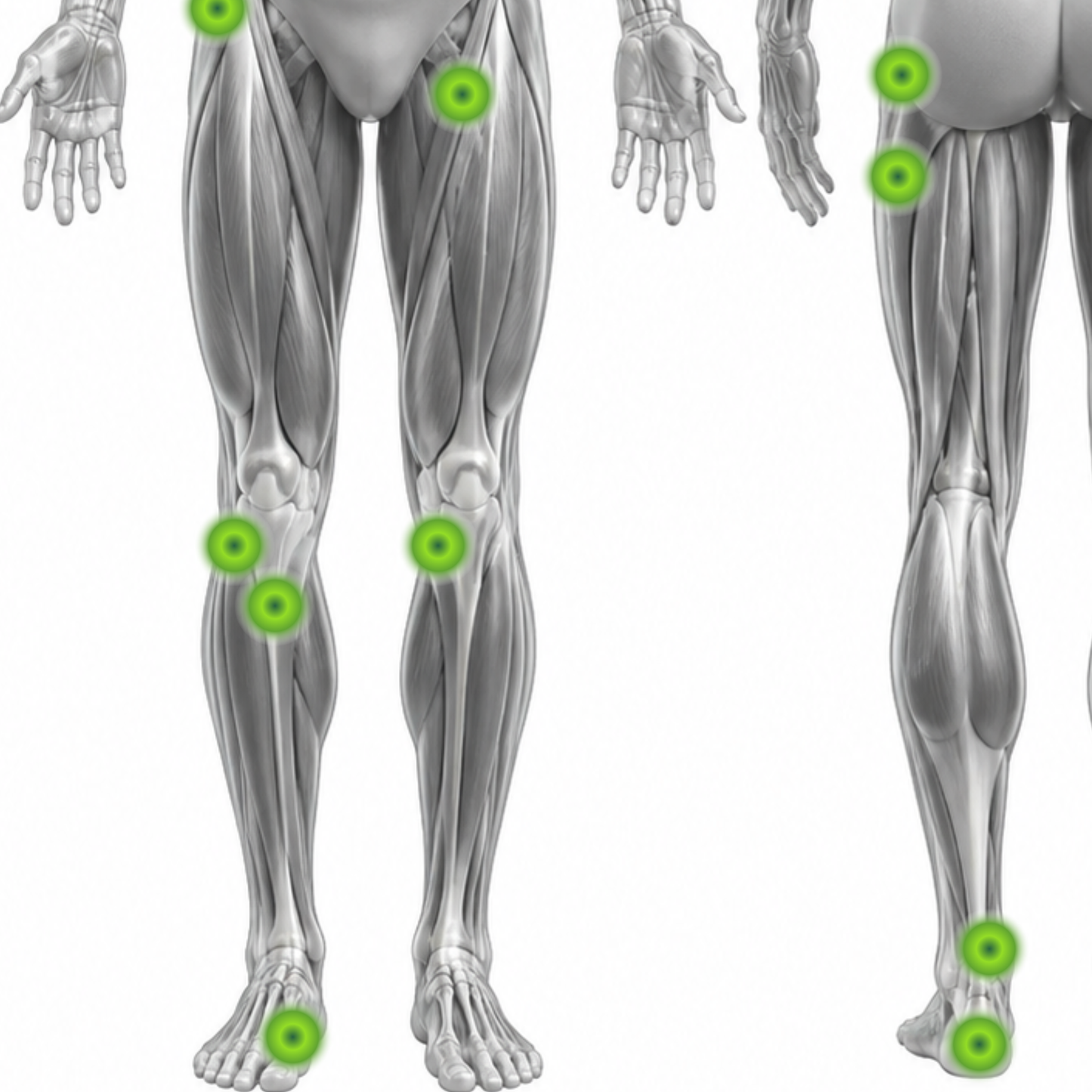
- Hip and gluteal region
- Pelvic and proximal thigh musculature
- Anterior, medial, and posterior thigh
- Knee and patellar tendon
- Lower leg and calf
- Achilles tendon
- Ankle
- Heel
- Plantar fascia
- Foot and selected superficial soft tissues
Conditions and Clinical Presentations Discussed
Educational examples may include:
- Greater trochanteric pain syndrome
- Gluteal tendinopathy
- Proximal hamstring tendinopathy
- Patellar tendinopathy
- Quadriceps and adductor-related soft-tissue complaints
- Medial tibial stress syndrome
- Achilles tendinopathy
- Plantar fasciopathy and plantar heel pain
- Myofascial pain and trigger points
- Superficial tendon disorders
- Chronic soft-tissue pain
- Fibrotic or restricted soft tissues
- Overuse-related lower-limb complaints
- Selected rehabilitation and return-to-activity considerations
Discussion of a condition does not establish that radial pressure wave therapy is appropriate for every patient. Treatment decisions must follow an individualized assessment and remain within the practitioner’s qualifications and professional scope.
What You’ll Learn
This course examines the scientific and clinical principles required to evaluate and apply radial pressure wave therapy to the lower limb, including:
- Functional anatomy of the hip and lower extremity
- Tendon structure, pathology, and healing response
- Fascia, muscle, and enthesis-related presentations
- Relevant pain mechanisms and tissue physiology
- Principles of acoustic pressure wave generation
- Proposed biological mechanisms of radial pressure wave therapy
- Differences between radial and focused shockwave technologies
- Current evidence for common lower-limb applications
- Patient history and physical-examination considerations
- Differential diagnosis and recognition of red flags
- Patient selection and treatment suitability
- Contraindications and precautions
- Applicator and transmitter selection
- Patient positioning and tissue targeting
- Pressure, frequency, pulse count, and dosing considerations
- Patient comfort and treatment-response monitoring
- Progression and modification of treatment parameters
- Integration with exercise, load management, and rehabilitation
- Documentation and outcome assessment
- Patient communication and informed consent
What’s Included
Evidence-Informed Clinical Instruction
Examine the available research, proposed mechanisms, clinical indications, and limitations of radial pressure wave therapy. The course emphasizes critical interpretation of evidence rather than dependence on universal or diagnosis-only protocols.
Functional Anatomy and Clinical Assessment
Review lower-limb anatomy, biomechanics, and examination findings that may influence treatment selection. Learn why a defensible clinical impression is essential before choosing an applicator, transmitter, treatment location, or dosing strategy.
Case-Based Clinical Reasoning
Work through applied clinical examples demonstrating how assessment findings, tissue presentation, symptom response, functional demands, activity goals, and current evidence can guide treatment planning.
Rehabilitation and Load Management
Explore how radial pressure wave therapy may be incorporated into a broader care plan that includes progressive exercise, tendon loading, mobility work, activity modification, and return-to-sport or return-to-function planning.
Practical Technique Demonstrations
Observe clinical demonstrations covering:
- Patient and practitioner positioning
- Identification of relevant anatomical landmarks
- Palpation and treatment-area selection
- Applicator handling and movement
- Transmitter selection
- Treatment-area preparation
- Parameter selection and adjustment
- Patient-feedback and comfort monitoring
- Post-treatment reassessment
Comprehensive Digital Resources
Course materials may include:
- Expert-led video lessons
- Anatomy and clinical-theory instruction
- Practical technique demonstrations
- Step-by-step treatment guides
- Research and evidence discussions
- Clinical reference documents
- Case-based learning materials
- Protocol and parameter considerations
- Rehabilitation and load-management guidance
Certificate of Completion
Participants who successfully complete the course requirements will receive a Wasabi Method certificate of completion documenting their participation in lower-limb radial pressure wave therapy education.
The certificate confirms course completion. It does not constitute professional licensure, board certification, specialty certification, or authorization to practice outside the participant’s existing professional scope.
Who Is This Course For?
This practitioner-only course is intended for qualified healthcare professionals involved in musculoskeletal assessment, treatment, sports medicine, or rehabilitation, including:
- Physicians
- Chiropractors
- Physical therapists and physiotherapists
- Podiatrists
- Osteopaths where professionally regulated
- Nurse practitioners
- Physician assistants
- Athletic trainers
- Sports medicine and rehabilitation professionals
- Other appropriately licensed healthcare practitioners
Participants are responsible for confirming that the assessment methods and treatment techniques discussed are permitted under their professional license, training, device regulations, and applicable laws.
Why Take This Course?
Lower-limb tendon and soft-tissue conditions are frequently influenced by multiple factors, including mechanical loading, training volume, biomechanics, systemic health, recovery capacity, and pain sensitivity. Effective care requires more than identifying a painful structure and selecting a preset protocol.
This course is designed to help practitioners:
- Strengthen lower-limb anatomy and pathology knowledge
- Apply evidence-informed clinical reasoning
- Improve patient-selection and safety decisions
- Identify contraindications and referral indicators
- Select treatment parameters more purposefully
- Monitor patient response and adjust treatment appropriately
- Recognize when treatment should be modified, deferred, or discontinued
- Integrate radial pressure wave therapy with active rehabilitation
- Communicate potential benefits and limitations responsibly
- Deliver more consistent, assessment-led care
Shockwave Therapy Faculty: Dr. Adam Gavine
Dr. Adam Gavine is an internationally recognized chiropractor, ESWT provider, and shockwave therapy instructor with more than 19 years of clinical experience. As Co-Founder and CEO of Wasabi Method®, he has trained physicians, chiropractors, physical therapists, and other healthcare professionals in the science and clinical application of radial pressure wave and extracorporeal shockwave therapy.
An International Shockwave Science Educator with Electro Medical Systems (EMS), Switzerland, and a PhD candidate at the University of Sydney, Dr. Gavine combines current research, clinical reasoning, and practical treatment protocols to help practitioners apply shockwave therapy safely and effectively.
Advance Your Lower-Limb Treatment Knowledge
Build a stronger scientific foundation for radial pressure wave therapy and learn how to integrate the modality into responsible, patient-centered musculoskeletal care.
Enroll in the Wasabi Method Radial Pressure Wave Therapy for the Lower Limb course and advance your practitioner education.
ⓘ Course Disclaimer: This digital course is provided for professional education only and does not replace patient-specific diagnosis, medical care, or professional clinical judgment. No physical device is included. Practitioners must follow device instructions, applicable laws, and their authorized scope of practice. Course completion does not provide licensure or specialty certification. All content is proprietary and © Wasabi Method, LLC. All rights reserved.
Share